Liverpool Street Station is dated. The 1991 refurbishment that transformed the station from two separate entities into a coherent if still compromised single facility now needs another look. But the proposals put forward by Network Rail and its partners are depressing and the way in which they’ve been presented makes me feel that my needs as a passenger are a very long way down the developers’ priorities. I’ve been reading Liverpool Street: A station for the twenty-first century by the 1991 project’s architect Nick Derbyshire, and if the main achievement of that time was that ‘light is the new element of Liverpool Street’, through the provision of an open concourse the airiness of which which cheers the soul on arrival in the city, the promise of our current age is to bury arriving commuters under a building of 16 storeys, itself perched atop the 5-storey Great Eastern Hotel. The hotel’s reward for being listed is that it will be utterly smothered.
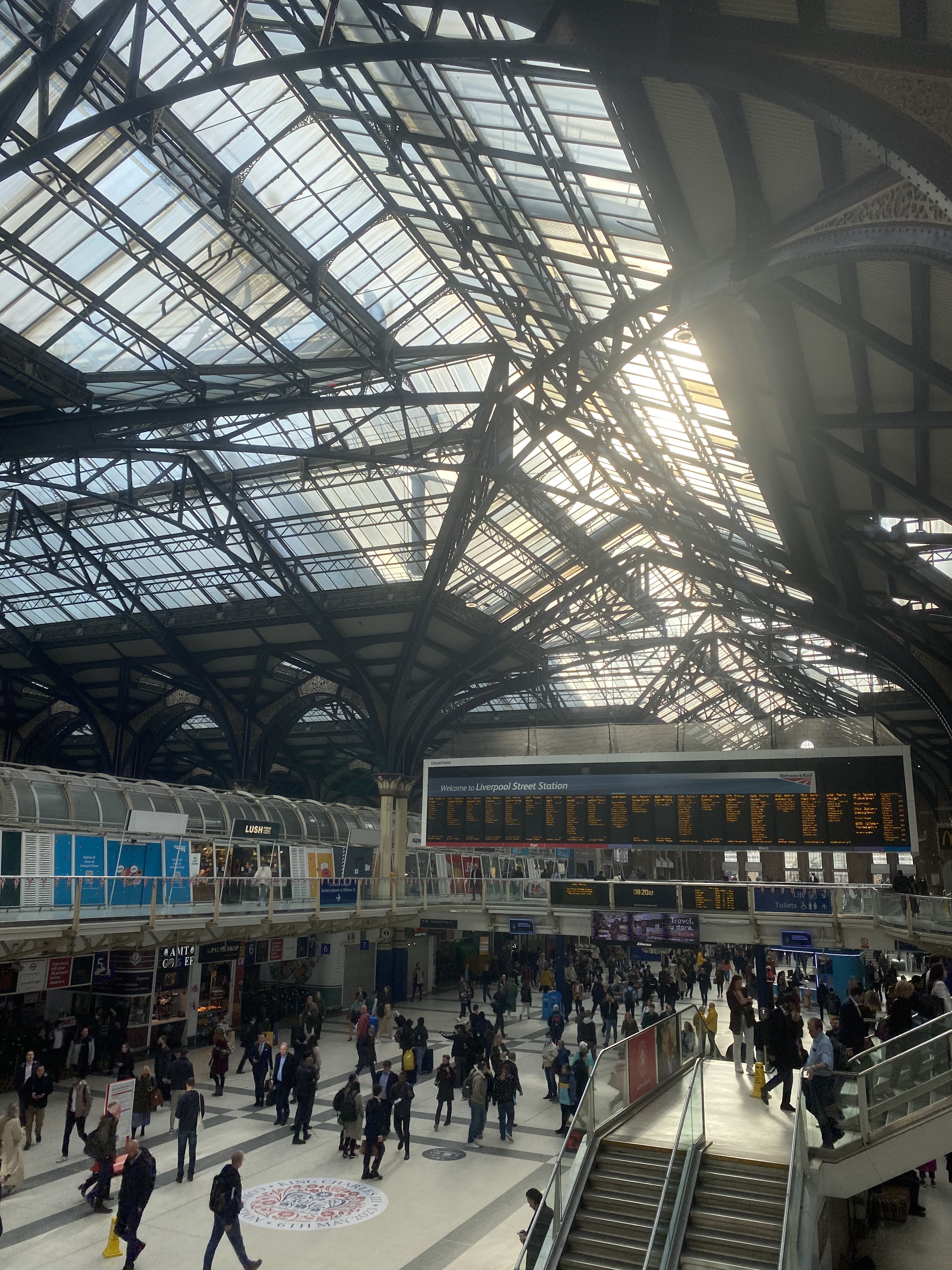
It’s hard to trust proposals that say they are about the transformation of a station but which rely heavily on semi-relevant new features like a new entrance route that the majority of passengers will have no reason to use, through an old (if impressive) ballroom off the main beaten track. It’s hard to understand how Liverpool Street station was originally developed: it was built in two parts, in 1875 and 1894 respectively, with platforms of differing lengths and a bridge between the two parts. The roof of the 1894 station wasn’t listed which is why platforms 11-17 are now buried under an office development as part of the 1980s rebuild. Much of what we think of as the rest will now follow suit. Whereas the public material provides copious pictures of the ballroom and the roof podium and garden, and seem to make great play of Hamilton Hall no longer being a Wetherspoon’s, it’s not really clear where the station’s existing retail units will go (we know only that they will be moved) and the new lower concourse that will be used by every passenger is only really shown 2 minutes and 36 seconds into the publicity film.

The problem for campaigners is that much of what passengers think of as 19th century structures actually date back only to 1991, when those two unwieldy parts of the station were hewn into one with a consistent gate line and single, light-filled concourse that looks as though it’s been there forever. But it’s only 32 years old and so can be destroyed as though it has no value, and the developers can hide behind the idea that the Victorian bits are going to stay and it’s only the horrible modern rubbish (as many would say) that’s going. The January 2023 proposals state that 9 out of 10 people support the preservation of the Victorian train sheds. But many of those people, I suggest, would have thought that the concourse was included in this. Besides, without the 1991 replica extensions, the Victorian elements that remain will seem short and stumpy, losing their impressive scale. ‘Unveiling lost historic views,’ trumpets the proposal document. But the only history this development is interested in is the material it’s been forced to save. Anything that’s not been listed is fair game for demolition.
Away from the commerce-driven excess, there’s some obvious thoughtfulness, as you’d expect from architects of the pedigree of Herzog & de Meuron. We’d expect it to be easier to connect to the Underground or Elizabeth line. The new proposals for Bishopsgate Square are a little like the original proposals from the 1980s which were pared back in a compromise. The proposed new main entrance at Hope Square makes the most of being buried under a skyscraper: at street level the curves are reminiscent of the historic join between the concourse and the Great Eastern Hotel. The new upper concourse means that there will be space for cycles. But the lower concourse will remain as crowded as now – departing passengers want to be close to the platform gates – and the main difference will be that airiness will be replaced by claustrophobia.
The worst thing about all of this is that we’re being told that this is in our own interest, that without the development we can’t have the most basic updated facilities, as though Network Rail can’t be expected to provide things like lifts and escalators. Of course passengers with disabilities need adequate facilities. Of course more lifts and escalators are a must. But it’s appalling to suggest that the only way in which Liverpool Street Station can give its passengers a working station is for this redevelopment which buries us under an office building without charm, style or scale. If the overcrowding at Liverpool Street is caused by more of us passengers turning up than the station can deal with, then we expect part of our ticket money to be spent on the fabric of the station. We pay enough.
 Cafethinking