Is there a right way to read a book? Are there rules? What if you get it wrong? You’d think I’d know by now but every now and then you have to question yourself. Abroad in Japan by Chris Broad has been a publishing sensation. The UK is going through a craze for Japanese film, fiction and general culture, and Abroad, written by a popular YouTuber was published just in time to clean up. It’s been a retailer’s book of the month, and in the top 50 chart for months. I don’t know enough to work out how the book fits with Broad’s YouTube channel – much of what I’ve found online suggests that he has a large and devoted but not slavish following. Clearly there is enough on offer to widen the audience. Us monoglot Brits can’t get enough of a sharply-observed travelogue that shows what it’s like to be on the outside.
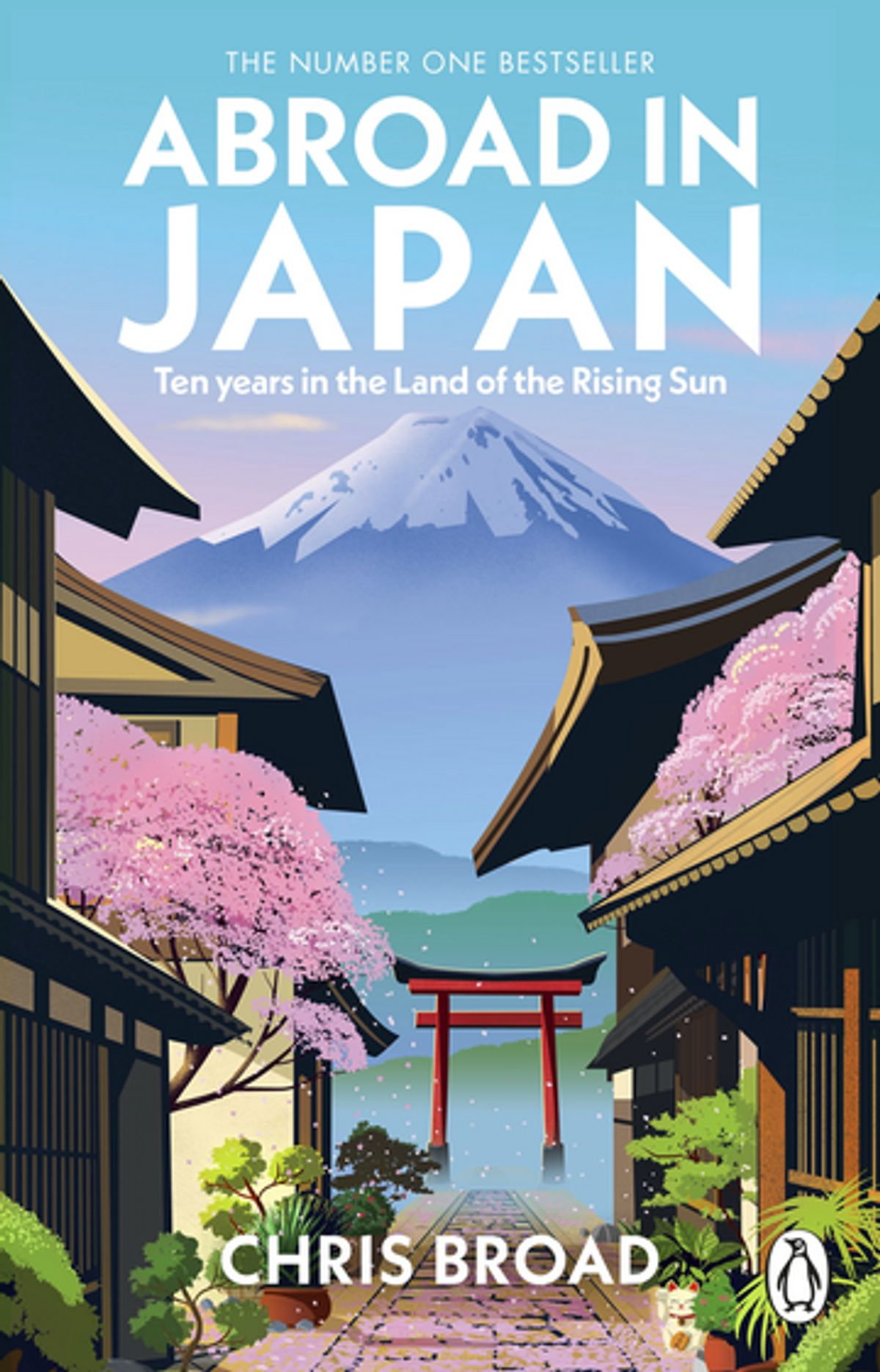
Normally, I dip in and out of books, start again, play about with them and once I’ve got to page 100 I’m right in the author’s world and won’t be coming out again ’til the finish. That works equally for fiction and non-fiction. I consumed this book quite differently: in one sitting, on a plane from Heathrow to Tokyo Haneda. My knowledge of Japan was previously pretty much limited to the Netflix show Midnight Diner and a YouTube video about how to get around Shin-Osaka Station, but we were going anyway and I needed to gen up. The standard guidebooks were fine for a fortnight’s trip but I wanted something else: not a survival guide but a helpful lens.
I got exactly what I came for: a huge amount of insight and some funny stories with Broad (usually) as the fall guy. He’s informative and witty and makes few demands of the reader. He explains cultural differences in a way that makes you feel faintly wise for getting them. Example: when you go in a group to a bar, the first priority is to get a round in. You don’t get to choose your drink, you get one bought for you. I would hate that, but the point is to get the group’s conversation started straight away. Choices can come later. By the time you get to the end of Abroad you feel that you’re ready to let go and fall into a new culture and see what it will bring you. That’s not always easy – I had a book about Japanese food which sort-of tried to do the same thing but – despite being gorgeously written – had too much information and too little story. Broad, on the other hand, is an excellent story-teller.
It’s perhaps inevitable that the strongest parts of the book come when Broad is in new places – when he arrives at the school where he’ll teach, or when he visits Osaka and is relieved by its relative messiness. There’s a sudden lurch when he finishes teaching and focuses on his YouTubing. I guess, if you follow the YouTube channel you’ll be familiar with Broad’s story but I for one felt that the unconfident but confidant flatmate who’d shared his experiences after work every night had moved out. I had friends who did the JET teaching scheme, but they came back to the UK. So why had Broad stayed on? What was his plan? Some of us didn’t know. A few pages on this could have made quite a difference.
On arrival in Tokyo, we made our way to see the sakura which were in full blossom, and then to Shinjuku whose effects on the senses are as far from rural Suffolk as you can get. We had our standard guidebook but for the first few days, insights from Chris kept popping up and helping make sense of it all. (Day 4 brought different needs, but that’s for a different blog post.)
Back in the UK, I still haven’t watched any Broad on YouTube, but I might revisit Abroad to compare notes. It’ll be like a quick catch up after work, but no one will get to choose their first drink.
And in answer to the questions that started this post: no there isn’t, yes there are, but do ignore them anyway. I don’t think I was Chris Broad’s target audience, but I got along just fine. As did he.
 Cafethinking