A trip to Boston means that you have to (if you’re me) read up about the Kennedys. I chose The Senator: My Ten Years with Ted Kennedy by Richard E Burke (with William and Marilyn Hoffer). Now political memoirs are often all about being at the centre of it all, and trying to justify your decisions. Burke does the first of these and it’s only after a while that you realise why he isn’t trying to do the second. Finally, like Burke himself, you stagger out into the daylight. This isn’t a memoir: this is a kiss and tell.
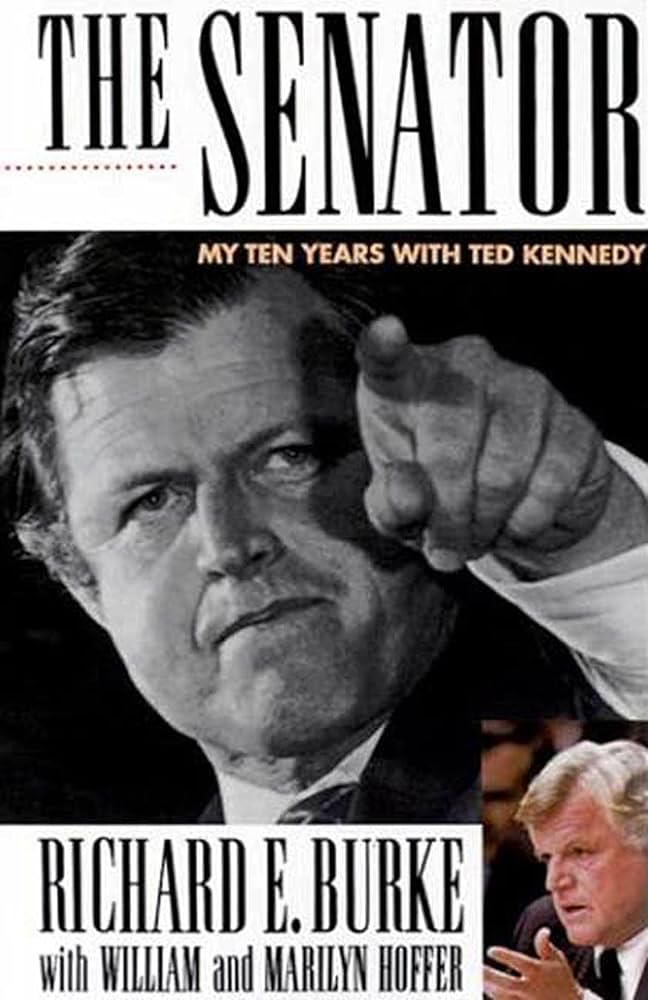
The story goes like this: Richard Burke, fan of the Kennedy family, starts volunteering in Senator Ted’s office. After a while, he’s Kennedy’s main personal administrative assistant, supporting him in all matters political and personal. The personal includes sorting out drugs and covering up infidelities. Eventually Burke experiences a breakdown. In order to leave Kennedy’s service he trumps up some story about being attacked. Subsequently he turns himself into the police and away from the Kennedy entourage. A decade or so and a number of failed businesses later, Burke serves up this book.
It’s all very tawdry, and not a little sad. Kennedy’s wild living is not news now, and I am not sure whether this book made news when it came out. (Some cursory searches suggested it did, a bit, but not that much; that enough people subsequently said that Burke was not quite as at the heart of things as the book asserts to rise above the business of he said, she said.) There are a couple of fun anecdotes, such as when Kennedy got one over Nancy Reagan at the Vatican. But otherwise the emphasis is on bleak hedonism in the Kennedy camp.
I’d hoped to learn a bit more about Kennedy’s political agenda: indeed, that’s all I was really interested in. Burke, it’s fair to say, is not a policy wonk. He’s not interested in presenting a chronology of shifts in the Senator’s thinking, and perhaps he never had exposure to that anyway. He seems interested in the stardom of it all, and his proximity to Jackie, and Warren Beatty and whoever else. The presentation is of being shocked and appalled and sucked in.
So on one level the moral of the tale is not to be sucked in: to remain authentic.
I am not sure whether this falls under the category of I-would-say-this-wouldn’t-I, but the other thing that seems to come through is how important it is, if you’re a staffer, to be completely behind a cause: to want to do some work. Burke wants to be, not to do. (And yet he could never himself be a Kennedy.) All political careers end in some kind of failure, so wouldn’t you want to have something to show for your time and effort? At the end of it all, Burke claims to be appalled by his own behaviour and that the only way to try to exonerate himself is to tell what he sees to be the truth. But the greater question – what was the point of it all? – remains unanswered.
 Cafethinking
The author ends his fabulistic book stating “Everything described in this book did happen” instead of unequivocally stating ‘Everything described in this book of what Ted Kennedy did and said did happen.’ Since his story is filled with composite characters and psuedonyms, I’m left to wonder if all of the alleged misdeeds were merely the behavior of others which was projected onto Ted Kennedy.