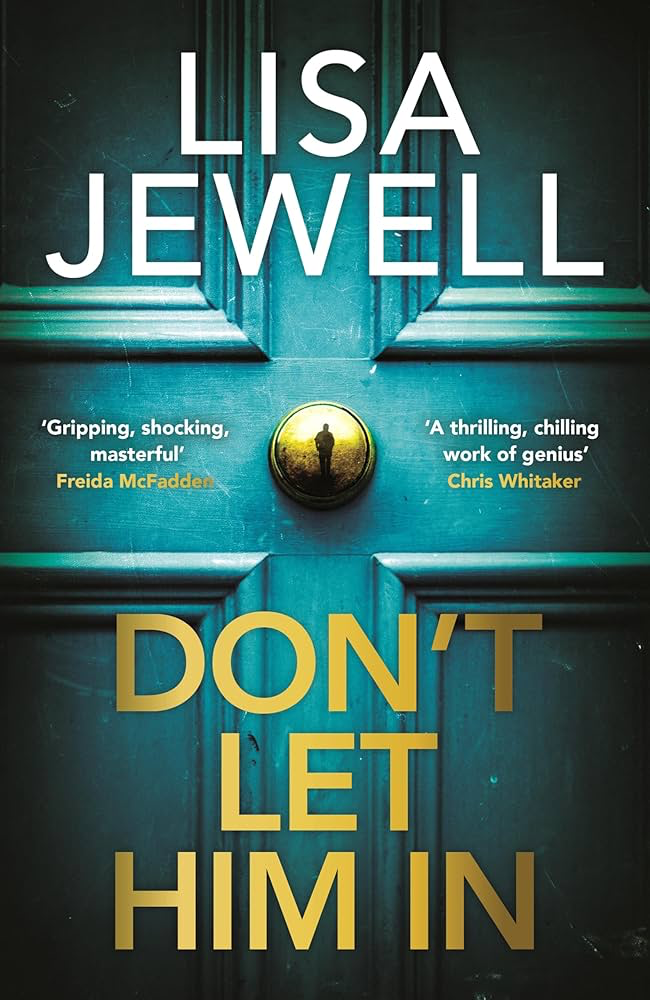
’I was convinced there was something really bad going on,’ said Grace. ‘I thought that he was one of those blokes you read about. The ones who marry loads of women and lie to everyone and steal all their money.’ I howl at the page, because, of course, Grace has summed up exactly what is in fact going on. Women are being married, lies are being told, money is being stolen. And at this point, we’re half-way through the novel and too many characters are still utterly oblivious. From the title onwards, Don’t Let Him In feels like a series of warnings from Lisa Jewell, rather than a standard thriller. But of course, they did let him in. All of them did. And so we want to know what happens next.
Simon (he has other names, too) says he has a ‘blueprint for managing women’. The women who have the privilege of his management can expect to be royally ripped off. In order to meet Simon’s assessment of his own needs, or even because he was a little annoyed that day, their careers might be ruined, their house will be remortgaged, they will pay so much financially and emotionally. They may even lose their life. Simon is quite self-aware, in the same way that an alpha influencer is self-aware. When he talks about his father he says he is: ‘A horrible man. A sociopath. A narcissist. An abuser. I could blame him for everything if I chose, but I do not choose, because that would give him power.’ But he knows he is talking about himself.
And what of the women themselves? Around the time that Grace tells Martha (as above) that everything is OK, we’re furious with the lot of them? How can they – with the exception of Nina’s daughter Ash – be so oblivious? They are women who run businesses, they are professionals, they have street smarts. But on the other hand they are charmed, they are invested and they are tired. So tired. Tired of being on edge, or of following the train of mistrust right to its logical conclusion. Jewell is excellent at showing just how much courage and energy is needed to start paying attention to inconsistencies and, worse still, start to think them through and build a case. Even as they know things are too good to be true, there’s so much internal pressure on them to just go along, and did I mention they were tired? When Simon decides that young women are like cats, it feels as though he’s conceding that they haven’t given up yet, they aren’t ready to settle for what he’s providing.
All this leaves us yelling at the book. Simon gets loads of first person narrative and for all that one female character says that she is an unreliable narrator, Simon does it and gets away with it. So much of all this is uncomfortable and unenjoyable, in a hate-scrolling kind of way. What keeps us going is two things. First, as usual, the prose is too good for us to stop reading. We know that Jewell can bend the reader to her will which is a power that Simon (and alpha influencers) use for bad but it’s OK, isn’t it, when it’s on the side of the angels? Second, we know that this is too important an issue for Jewell to let Simon prevail. We know he is going to get his comeuppance, and we know it’s going to be good. When it happens, it’s being called a ‘loser’ that tips him over the edge.
In her acknowledgements, Jewell points out that Simon is ‘not an outlandish literary confection’. She provides links on psychopaths and sociopaths. This is a thriller, and it is a warning. Don’t let him in. Are you getting it yet?
Other Lisa Jewell novels reviewed on Cafethinking:
 Cafethinking