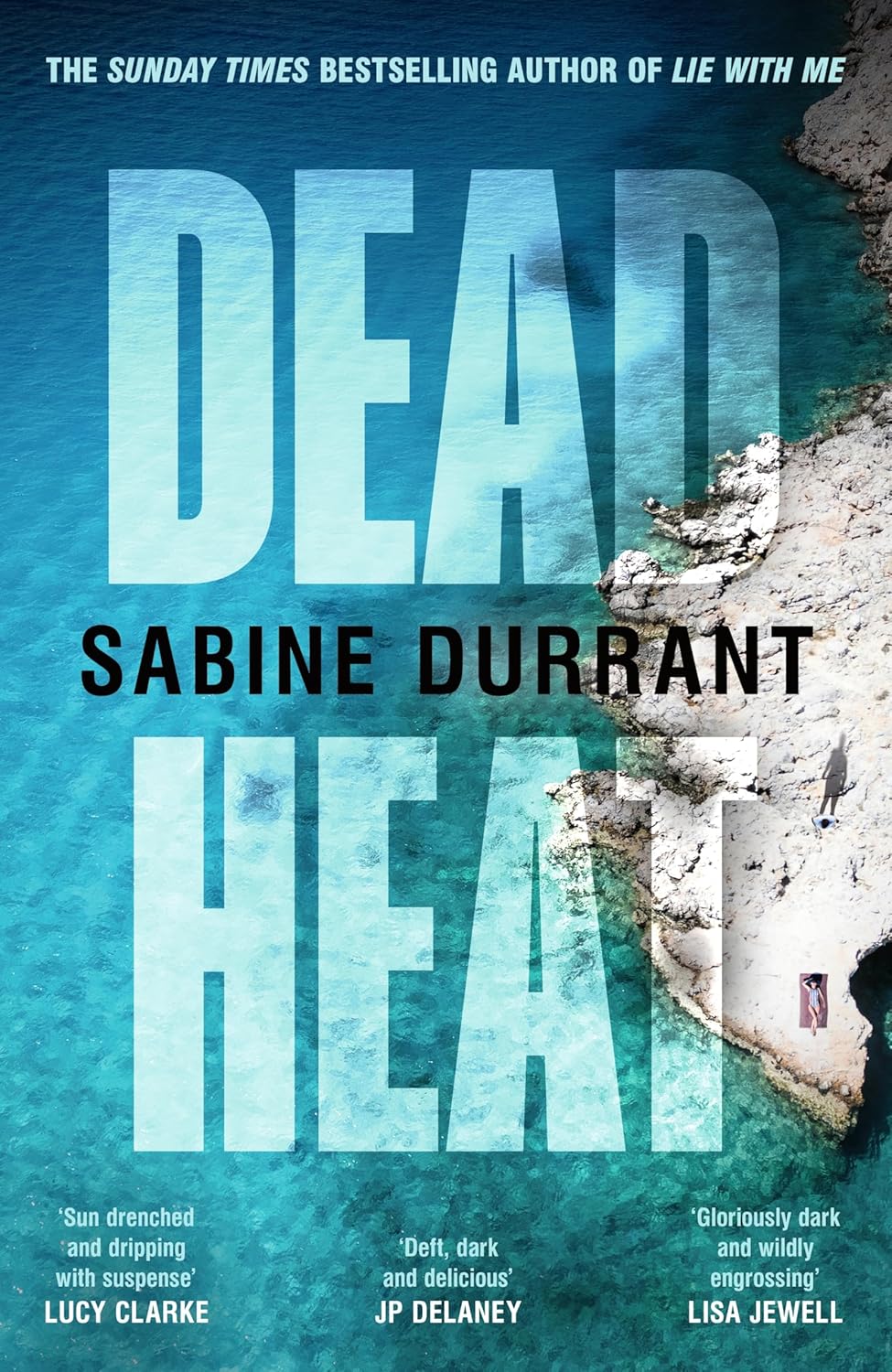
A truth about truth is that it’s a slippery thing. We can hanker after certainty, but often clarity is a false friend, providing us with a comfort blanket that is good for cuddles but that, unlike a mixed metaphor, won’t bear our weight. Sabine Durrant’s new novel, Dead Heat, lives in ambiguity. Even its ending, which deals with the fall-out from a murder, is open to more than one interpretation. The result is a fabulous puzzle that invites you in, but only on its own terms. Which is, I suppose, not a bad way of describing its four main characters.
Matt, the narrator, is down on his luck. He’s lost his job and his girlfriend, but he’s staying on a Greek island, at the pad of his two wealthy friends. Celia and Adam are settled (if you forget Adam’s multiple affairs) and successful. And then Reynash arrives on the scene. Adam bullied him when they were at school, and they haven’t seen each other since, but Reynash is now a billionaire tech bro. He’s built a palatial pad just next to Celia’s ancestral holiday villa. And he’s throwing parties, at which he is only sort-of present.
There’s a tension that builds up between Adam, Celia and Reynash and Matt is kind of along for the ride. He’s just there, inserting himself into a world to which he both utterly belongs and also doesn’t, quite. He has the cultural chops to be part of this group but neither old wealth nor new money and, this is a group that needs money – for yachts, to throw parties, and to pay off blackmailers whose hearts have been taken for granted. There are some dead bodies to be found among the rocks and cicadas of paradise. Somehow, that’s Matt’s way in.
In my haste to define this novel I draw on The Great Gatsby and, almost equally, The Inbetweeners. The former speaks for itself; the latter link comes about because Adam at times behaves a bit like Inbetweeners Jay but like the sitcom’s character has been bullied by an overbearing father. There’s Graham Greene here too: I can’t remember the last time I found matters of faith (or at least, faith-inspired behaviour) discussed so openly in a novel. And at times Matt reminds me of Keith Barret from Marion and Geoff – a third wheel who almost revels in that role. But Dead Heat’s truth is that it is none of these things.
My advice to Matt is simple: run. Adam is a disaster zone and Celia isn’t worth it. But that advice is predicated on Matt being the…well, if not the nicest, for Celia is superficially nice, then the least appalling. But Matt is the narrator, and although he comes across as honest in his description of the events – certainly he doesn’t gloss over his own messiness – he’s still a protagonist in this story with an interest in coming out of it looking OK. And Matt can’t run – there’s nowhere for him to run to and, besides, he is besotted with both Celia and, in a different way, Adam. In deference to his feelings, he will be demeaned and happily co-conspire in the diminishing of his own reputation.
And yet Matt’s strengths, quiet though they may be, are at least good for the soul. When he writes ‘what counts for you is evidence, painstaking research, and small acts of kindness, like being friendly to people in shops’, we know he speaks for the underdog.
There were times that I wondered, given my dislike for almost all the characters, why I was continuing to read. The quality of the plot and the layering of the writing are top drawer. I learned a little about truth. And a lot about the perfect crime.
Thanks to Penguin Books for the review copy and to Anne Cater for the blog tour invitation.
 Cafethinking