Contains mild spoilers for the previous book in the Iceland Mysteries series, Dead Sweet
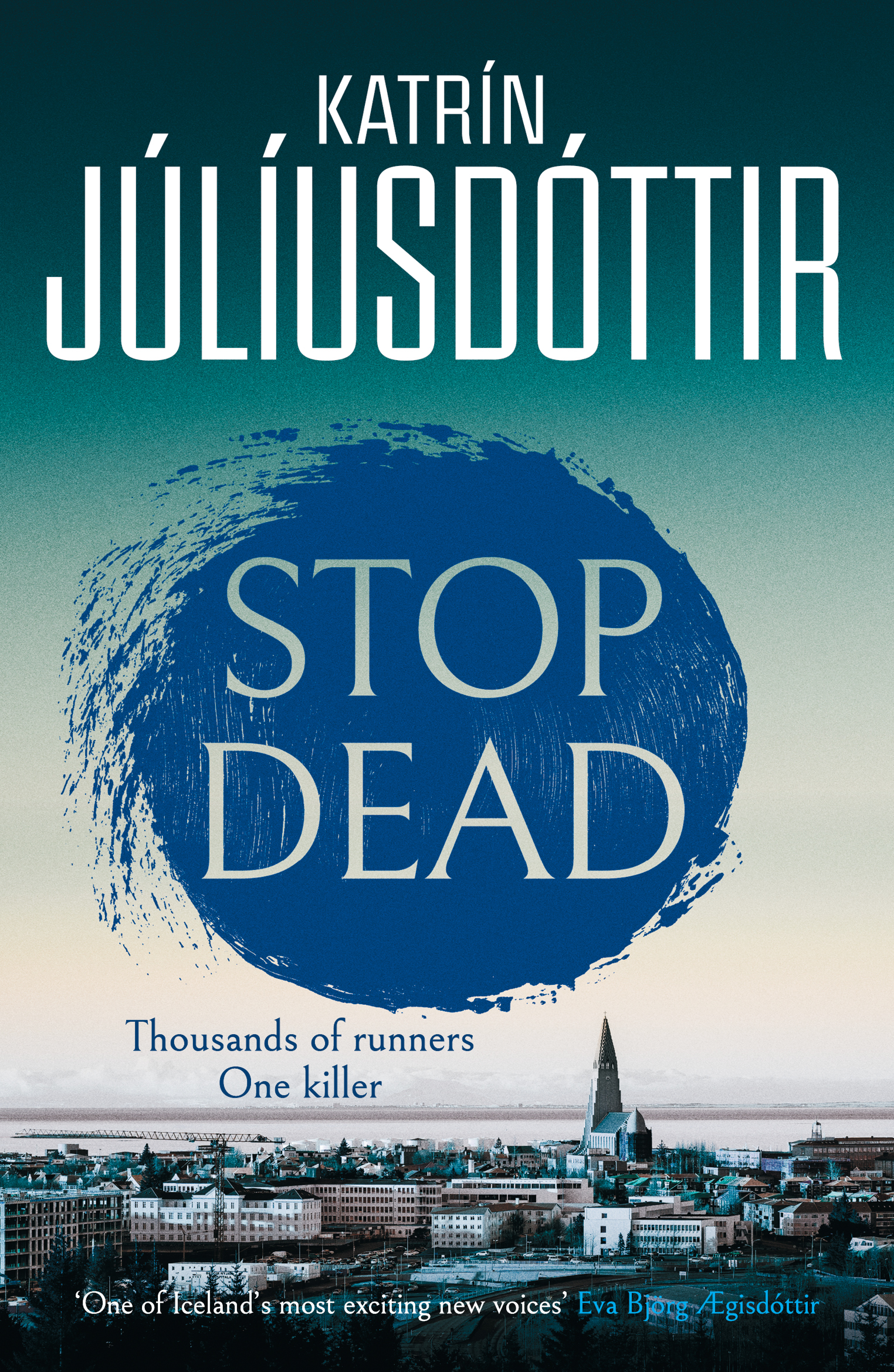
Stop Dead is a cleverly paced, cleverly timed sequel to Dead Sweet, the first novel by the former Icelandic politician Katrín Júlíusdóttir. Sigurdís, the main protagonist, has been in the United States since Sweet met his end. She’s been healing since the death of her estranged and abusive father. She returns to Iceland because the case of her father’s death has been reopened. Here to support her family, she’s back on the police force and ready to investigate the murder of a larger-than-life TV presenter.
There are times where Júliusdóttir uses the shorthand of the genre. CID boss Ólöf is gruff, demanding and has a heart of gold, but we know that because we just do: her short scenes don’t need to tell us. Given that the characters who need to be fleshed out are definitely three-dimensional I’m not sure that this is a problem. And Júliusdóttir uses this as a feature, rather than a bug. For example, it’s a cliché to observe that all Nordic Noir detectives are recovering in some way from harm. In Stop Dead, it turns out that almost everyone is. Olga, the murder victim, turns out to have been an extraordinarily nasty piece of work, who has, with one exception, ruined the lives of everyone she has met. Abusive and violent, she leaves decades of trauma in, or at, her wake. At some point, it turns out that one of Olga’s victims resorts to desperate measures. How many people looked away while Olga was behaving like a tyrant? How much could they reasonably have seen?
The mystery itself is good value, with enough red herrings to keep a trawler fleet busy. But for me, this novel is about its characters and an exploration of, on one side resilience, and on the other despair. We like all the characters we are supposed to like, to the extent of rooting for a much-foreshadowed workplace romance. But we also see how some people are able to escape terrible surroundings, and that such an escape may take terrifying detours such that it’s not clear that peace will ever be achieved. I’m reminded of Ken Loach’s Raining Stones, although Loach’s loan shark has been replaced by rent-a-thugs from the dark web.
Larissa Kyzer’s translation is effective and bright.
It looks as though there’s a cliff-hanger that’s going to take us into new territory. If Júliusdóttir is going to deliver a full series, as the ‘Iceland Mysteries’ indicates, Cafethinking will be delighted.
Thanks to Orenda Books for the review copy and Anne Cater for the blog tour invitation.