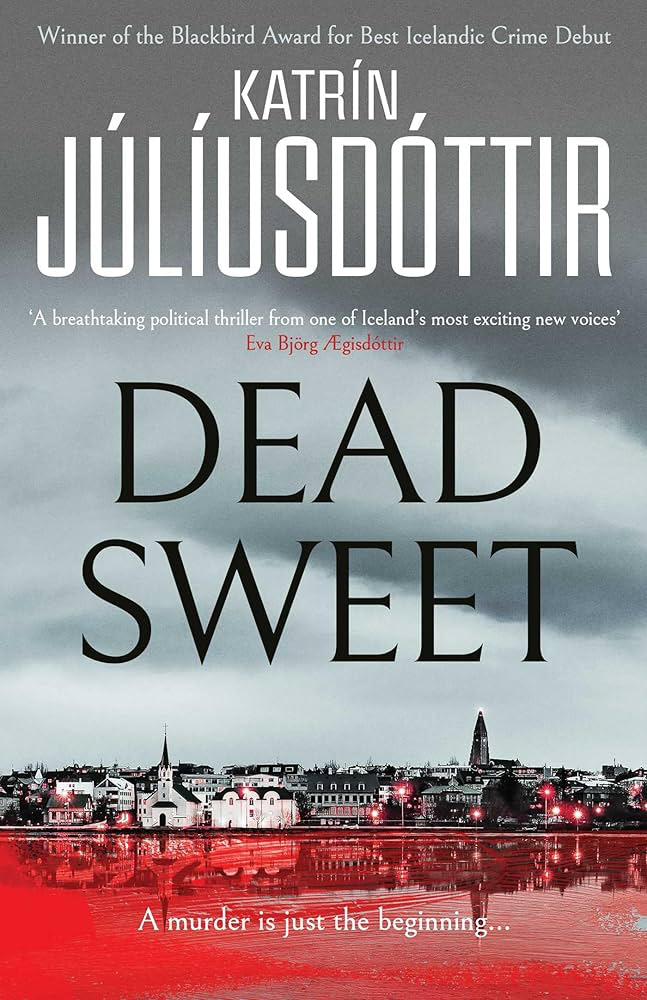
Dead Sweet, the first novel by the former Icelandic politician Katrín Júlíusdóttir caused quite a stir when it came out a few years ago, and it seemed like a good place in which to rediscover Nordic Noir after a little break. It’s hard-hitting and at times uncomfortable and challenges us to consider our personal power and bravery.
Sigurdís, the lead character is a junior detective. Like many Nordic leads, she’s damaged and with a complex back story: in her case, she’s recovering from her relationship with a violent father. She has a complicated relationship with the police: her father is an ex-cop, and the force didn’t intervene when they could have. Now her boss, Garðar, takes an almost paternalistic approach to Sigurdís and her family. The murder they are investigating relates to a man at the heart of privatisation deals following the financial crisis. Populist and charismatic, many Icelanders had hoped that he’d run for elected office. It soon turns out that he had a couple of hidden lives – financial and personal. His reputation is ruined. We don’t dwell on that, because we are more interested in the lives he may have ruined along the way.
I mentioned that there are hard-hitting themes and there are two parallel storylines that describe the abuse of children and young people by adults who either should have been their fiercest protectors or who shouldn’t have been there at all. I should say that the presentation of this abuse is never graphic and it never feels exploitative on the part of the writer: rather, Júlíusdóttir channels her fury and makes us furious also. That children in care have poor life chances is almost taken for granted. It isn’t that the system colludes in the betrayal of the powerless, but that it isn’t set up to particularly care. The approach that Sigurdís and Garðar take indicates that individuals have the opportunity to use their offices to work for justice. (Though I would have been happier, perhaps, had the murder victim been confronted and defeated while still alive.)
Júlíusdóttir makes us care about her characters and as you’d expect from a Quentin Bates translation the prose just zips along. I have gone straight into the sequel, Stop Dead, and the momentum is carrying me forward. Right now (not having read that much of Stop Dead) I’d recommend that you think of giving time to a mild Icelandic binge.
Thanks to Orenda Books for the review copy.


[…] Dead is a cleverly paced, cleverly timed sequel to Dead Sweet, the first novel by the former Icelandic politician Katrín Júlíusdóttir. Sigurdís, the main protagonist, has been in the United States since Sweet met his end. She’s […]