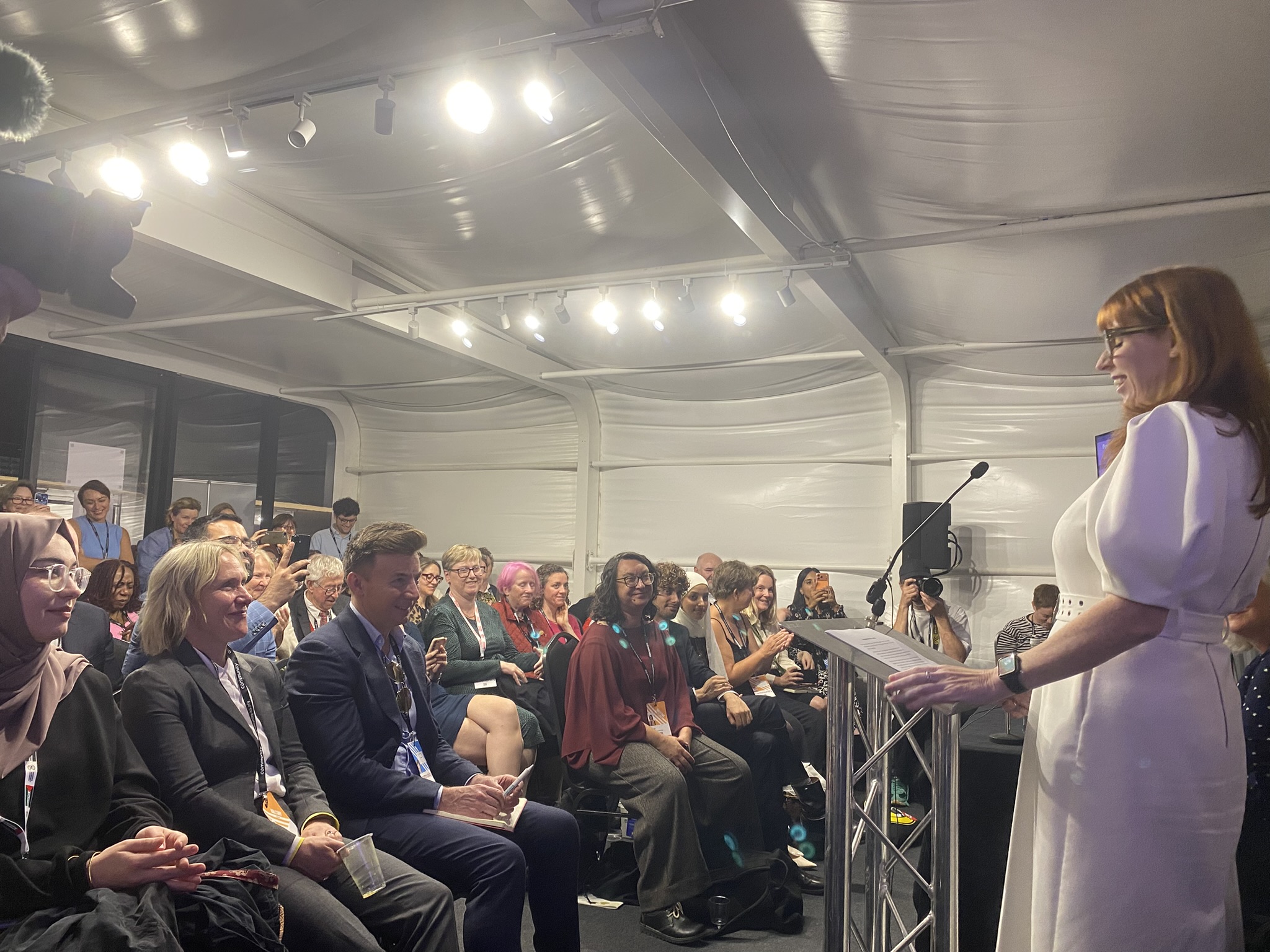
Spill the tea about conference, said my friend Ed, so here is some Earl Grey that hopefully hasn’t been in the pot too long. Liverpool 2026 was unlike any Labour conference I’ve been to. In some ways that shouldn’t be surprising: until 2024, all of them had taken place with the party in opposition. In 2024 there was a stranger backdrop forged by the entitled expectations of the lobby correspondents and last year there was a grim defiance and determination. This year saw a new mood.
In some ways, it’s odd that this should be the case. The government faces the same economic and societal fundamentals as its immediate predecessor. The comments made on Small Business Sunday, calling for business rates cuts and lighter regulation, remain the same as in previous years even if there is a warm welcome for the government’s crackdown on late payments which especially affect small and medium sized enterprises. Productivity and investment remain in the danger zone, and the government’s flagship plans on local government reorganisation (LGR) are being delayed. Entry-level jobs are being eradicated by AI, prison conditions need attention and county lines remain a threat. Mis- and disinformation are poisoning our politics. Since Andy Burnham became prime minister, some policies have changed and some have not. Although many Starmerites have left the government, some ministers – such as Jonny Reynolds, Angela Rayner and Jim McMahon are back doing the work that they started under Starmer’s first org chart. Burnham has signed up to the 2024 manifesto, so, even if he has started to show us glimpses of what might be in a manifesto for 2029 (or, plausibly, before then) his room for manoeuvre remains fairly slim. There is trouble ahead, as John Healey’s budget headroom diminishes almost in real time.
But it’s also entirely logical that Labour should have spent most of last week with a spring in its step. Much of that spring arises from the simple fact that they are not led by Keir Starmer. There is some sadness about this. One man who lost his council seat earlier this year told me that Starmer’s unpopularity in the country was both bewildering (he had himself met Starmer a few times and found him highly personable) and real. But as this blog has argued before, Starmer has starred in his own tragedy. Although the public seems to hanker for leaders who appear not to be politicians, we now have some evidence to show that people who think that they are above having to do some of the basics of politics may not actually be very good at politics.
Andy Burnham has worked out that if you want people to lead, it helps if you tell them the direction in which you want them to go. I went to loads of fringe events, and at a large proportion of them, a frontbencher or an MP would say – we are going to do this or that because the prime minister wants to do it. (By the way, that is not a phrase I heard very often during Conservative conferences when that party was in power.) They have wanted a project to be part of and now they have one. One MP, a former council leader, reminded a fringe that the Labour backbenches are filled with MPs who were used, in their previous lives, to getting things done in their local areas and they have been bored and frustrated. Is it any wonder that they will be rallying around the call of devolution and working out what is needed for their successors to make both this and local government reorganisation work.
I’ve written before that no one gets a particularly objective view of any conference, because there are (realistically) infinite potential conference schedules, and therefore the evidence in front of everyone is different. But no one I spoke to offered comments to refute the idea of a new confidence sweeping the conference. That may tell its own story. There were far fewer activists at the security points, trying to get you to come to what you might call a fringe fringe. Instead, there was a campaign for a crypto organisation.
That does not necessarily mean that the Labour Party, in its new enthusiasm, has forgotten who it is. Mugs to celebrate the sixtieth anniversary of Harold Wilson’s 1966 election win sold out, at a speed that sets a challenge for next year’s thirtieth anniversary of 1997. From a policy perspective, the focus on LGR is causing a new interest in the prevention agenda. Morgan McSweeney may not have wanted to talk health inequalities, but the Starmer government wrote into its devo laws the requirement to address it. If the Labour Party can make progress on the issues that matter to it, then its current mood may continue for a little while longer.

