Contains spoilers
For all the, you know, spy stuff, Slow Horses is at its heart a workplace drama. When the slow horses aren’t being targeted for assassination, they undertake mind-numbing clerical tasks that are designed to have them quit the secret service. All reluctant colleagues, with an inflated view of their capabilities and a misanthropic boss, there is little joint working and low morale – but woe betide anyone who tries to introduce false camaraderie, as Struan Loy did in series 1 (and look what happened to him). The series 6 finale, ‘Judgement Day’ delivers tension, spills and the river of all cliff hangers, but the central scene, with its mix of the absurd and the mundane is the meal that Moira cooks for the horses and their hangers-on, at Diana’s Suffolk pad.
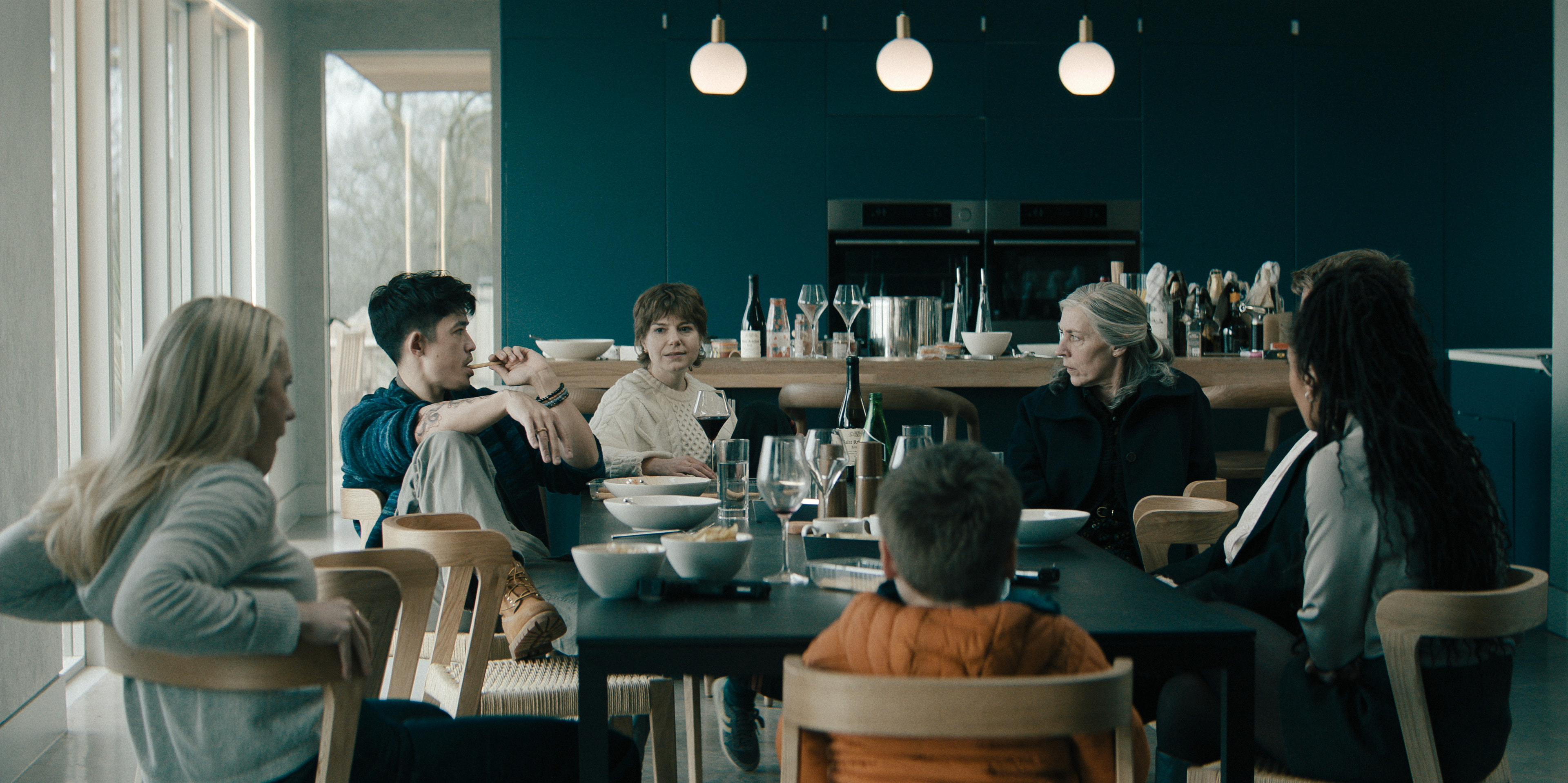
The worst workplace cultures are often accompanied by the assertion that the team is just like a family. Here, looking out towards the beautiful, bleak shingle, this unwilling team bickers with the force of decades of familial resentment. Moira points out she shouldn’t be there. Arguably, with the exception of Louisa (whose spell at Slough House was triggered by a potentially huge operational mistake), none of them should be there. Their involvement is the product of other people’s decisions, carelessly made. Shirley’s unresolved grief spills into her resentment of Louisa, who has her own reasons to grieve. Flyte is up for watching them fight. Catherine is so close to rekindling her destructive relationship with alcohol. Roddy and Reece are – well, the kids. We’re watching them all unspool, and maybe we prefer that, because although they can function in self-preservation (Flyte, Louisa, Shirley and, it turns out, Reece are excellent shots), we know that heartbreak is only a few moments away. (Maybe that’s the way to view the final scene – River looks like he is about to embark on a potentially functional relationship, and so heartbreak must thwart him.)
To be in battle is to be in chaos, and in recent years we’ve seen televised battles take place in darkness, which is authentic but hard for the viewer to follow. So it’s pleasant, if that’s the right word, for the final action showdown to take place in daylight. The dunes and the reeds make it easy to take cover. The family, or team, do manage to function, a little. Roddy’s contribution is perhaps the most interesting. Although abandoning Reece is first order cowardice, we know that Ho sees himself as a hero, and it’s entirely possible that he has convinced himself that he can save the crew if only he could procure a gun.
On the basis that the TV adaptations do follow the books’ kill list, it’s surprising that Frank Harkness may yet be alive. (At the end of Joe Country, Lamb believes that his plan to have Harkness assassinated has been successful.) But the scene between Harkness and River is a belter. Harkness tries to show River that they are more alike than River is prepared to believe, and, this time, these words may eventually resound. It’s very different from their drink in series 4, when Harkness offers River a job, and then tries to kill him. (You almost wonder if, mirroring a scene that seems so long ago now, River might suggest to Harkness that he call the Park and say that River Cartwright sent him.) Harkness is defeated, professionally and personally. River will have to come to terms with that, too, if he is still alive.
The scene at St Leonard’s Church is both satisfying and the opposite of that. So many joes and former joes have been lost, and yet only Coe receives a direct name check. In a way, that’s understandable – he was the only active agent in Slough House who was killed while operational – but that seems outrageously ungenerous to Flyte, who was, alongside Catherine, the nearest thing this series has had to a standard moral core. Lamb’s moral core, of course, is a different matter entirely. And it is this morality and sense of justice that prevails that day at St Leonard’s. He has, as he points out, been at this game longer.

Amidst all this psychodrama, the scenes with Lamb and Taverner are almost overshadowed, which is a shame because Gary Oldman and Kristin Scott Thomas dominate the screen whenever they’re in it. Lamb has, as usual, figured it all out, and his scenes with Natasha and Cantor are a delight. Taverner shows why, when back on her game, she beats the politicians on their own turf. But I can’t help but wonder if the bonkers plot veered at times into the…implausible. Who, in the end, was the mole in MI5? Why would the Kremlin seriously think Cantor was a double agent? On what basis has Diana framed Judd? Am I worrying unduly?
River’s return to his grandfather’s house just plays with us. If you want to know whether River survives, the answer is here. But in some ways the cliffhanger is just plain annoying. It takes us out of the story, and leads to infantile rumour about Jack Lowden and his other potential acting opportunities. Instead, let’s take a moment to consider the impact of the scene. Even if Sid gets downstairs in time to save River, what happens to the slow horses the following day when they realise they may need to gather again at St Leonard’s. No wonder Shirley has issues.

